As I mentioned a while ago, I often have my students complete practice logs. It's a good way to encourage them to practice, and it's also a good way for me to find new language-learning resources that I can pass on to other students.
This week my student Henry included two good websites in his practice log, and I wanted to mention them here.
The first is apparently called Randall's ESL Cyber Listening Lab (although the URL is simply "esl-lab.com," which seems much easier). As the name indicates, it's got a lot of listening exercises with audio, partial scripts, quizzes, and vocabulary highlights. It's even got cultural tips in some of the sections, so the site is pretty great. The topics are very diverse, from pizza delivery to how to behave in a Japanese public bath. There seem to be between 200 and 300 different pages with different topics, and they're conveniently arranged according to difficulty. Check it out!
The second link my student visited was engvid.com. It's also got a self-explanatory name, as it's mainly focused on videos. If you scroll down on the home page, you'll see different topics like business English, grammar, pronunciation, and even my favorite, idioms. The grammar section alone has 105 videos, so there's plenty of material to keep you busy for a while! Check it out, and enjoy!
Thanks for reading, and if you have any additional suggestions for online practice, please leave a comment. Have a great day!
Over the last week or so I've come across a few sites that I thought would be helpful for my readers learning English. One is TOEIC-related, and the other two are more about current news.
The first, English-Test.net, has some good practice exercises and tests to prepare for the TOEIC or other similar, standardized tests, like the TOEFL. It seems to have a lot of information, so it's probably good to spend some time exploring it.
Next, I also came across the PBS site called NOW. PBS is the public broadcasting network in the US, and this site has longer reports and videos about current events (for example, here's one about natural gas drilling in the USA).
So, check them out, and if you have any other links you've found lately, I'd love to hear from you in the comments section! Thanks for reading, and have a great weekend!
A while ago I did a blog post about Podcasts (click here to see it), but I wanted to highlight a few of them in a bit more detail. Today I'll talk about one and in the next few weeks I'll try to mention a few others I've enjoyed and recommend for language learners.
One of the most popular podcasts in The United States is This American Life. Since it's for native speakers, it's not necessarily made for English learners, but it still can be a great resource if you're trying to learn English.
The program comes out once a week, and each episode is an hour long. Every week they focus on a different topic and talk about normal people who have experience with the topic. For example, a few weeks ago the show talked about some people who thought they had discovered the original recipe for Coca-Cola.
One of the best things about this podcast is that it often comes with a transcript of the whole episode (Here's one from a recent episode about people in a drug-prevention program). For an English learner, these transcripts can be an incredible resource if you read along while listening to the podcast. However, doing that could also become tiring, so it might be best to break it into smaller parts.
This American Life's website is very extensive and has past episodes in its archive, but if you go through there, you can generally only listen to old episodes for free by using streaming audio. But if you get the show through itunes, it's free and you can keep older episodes for as long as you want. So that's the way I do it.
That's it for today. I'll try to highlight more recommended podcasts in the future. If you've listened to This American Life and have comments about it, or if you want to recommend other podcasts you enjoy, then please feel free to leave a comment. Thanks for reading, and have a great day!
In a previous post related to podcasts I mentioned that one of my favorite online resources was the BBC Learning English site. I still highly recommend that site, since it's almost like a little world of English-learning resources. However, just this week a student recommended the VOA Learning English site to me, and it seems like a good site if you're looking for additional English resources, without necessarily having to deal with the British accent that comes with the BBC's site (that may sound like I'm joking or being catty, but that has actually been one of the most common complaints or comments I've heard from my students who've checked out the BBC site).
VOA stands for "Voice of America," and although it's based out of the United States, it's meant for audiences in other countries. Their Learning English site has a lot of current news, cultural reports, and other information relevant to English learners. I'm still checking it out myself, but I'll post anything interesting I find on the site to Sitzman ABC's Twitter feed.
In the meantime, if you have any comments or other suggestions related to the VOA site or any other sites that you've come across, I'd be happy to hear your thoughts. Either comment in the section below, or contact us through email.
So far, I've mainly stuck to talking about English on this blog, but I've been meaning to add more content about other languages, as well. I actually studied German and struggled for nearly a decade to learn it, so often it's actually more interesting for me to talk or think about the German language than it is for me to write about English.
On the rare occasions that people ask about German, they often ask, "Is it hard?"
Short answer: Yes.
Long answer: Yes, it is.
German pronunciation is easier than English, since it's phonetic and English isn't, but that's about it. The main killer of students who are trying to learn German is grammar. I remembered I'd heard the following song about 10 years ago, and believe it or not, it's actually a song specifically written to illustrate German adjective endings. You can feel free to watch the video, although only the song is original; the video was made by some junior-high schoolers as an extra-credit project, apparently, and the video quality seems to verify that fact:
Now, if you don't understand German, then it'll likely seem like a bunch of gibberish. If you do speak German, it'll probably still sound like a bunch of gibberish, because it basically is. I guess that's what you get when you write a song based on grammar. For example, the first line* is:
"Eins, zwei, drei / der gute Mann / ein guter Mann / der gute Mann / ein guter Mann / schlag den guten Mann nicht / schlag einen guten Mann nicht / schlag den guten Mann nicht... gib dem guten Mann einen Fisch / gib einem guten Mann einen Fisch"
That means:
"One, two, three / the good man / a good man / the good man / a good man / don't hit the good man / don't hit a good man / don't hit the good man... give the good man a fish / give a good man a fish"
Look at the English, and compare it to the German version. If you notice, there's a lot going on here. In the German, the definite article the appears to be either der, den, or dem, and the indefinite article a comes out as ein, einen, or einem. And it's true! The words "the" and "a" really can have that many variations (or a few more, if you count plurals and genitive/possessive words). And what about "good"? That comes out as gute, guter, and guten. The reason for these linguistic shenanigans? In German, articles and adjectives change depending on whether the noun they're referring to is the subject, object, or direct object of a sentence.
And the worst part of it is this: "Mann" (meaning "man," pretty obviously) is a masculine noun... and German has three genders: masculine, "neuter," and feminine. Plus, you also have to change the articles, the adjectives, and thenouns themselves when you make them plural. And in fact, that's what progressively happens in the following three verses of the song.
English does have quite a few similarities to German due to the two languages' partially-shared history and development, but luckily for today's English learners --and much to the frustration of today's German learners-- English didn't retain a lot of this grammatical complication, while German did.
So, whenever you're having difficulties learning a language, it's sometimes nice to realize that it could always be worse. And if you're struggling with German, remember this: at least it's not Finnish!
Thanks for reading, and have a great day!
*This Turkish site has a kind of half-baked version of the lyrics (For example, it doesn't capitalize nouns, as is necessary in German), but I only direct you there for quick reference. For a better alternative, I suggest checking out Brad Yoder's website. I just realized two days ago that he wrote the song, and in a strange twist of fate, I actually met him in Pittsburgh in 2001. He's a good guy and deserves your patronage. Plus, he looks quite a bit like me, and he might even be my long-lost, evil-twin brother (or vice versa)!
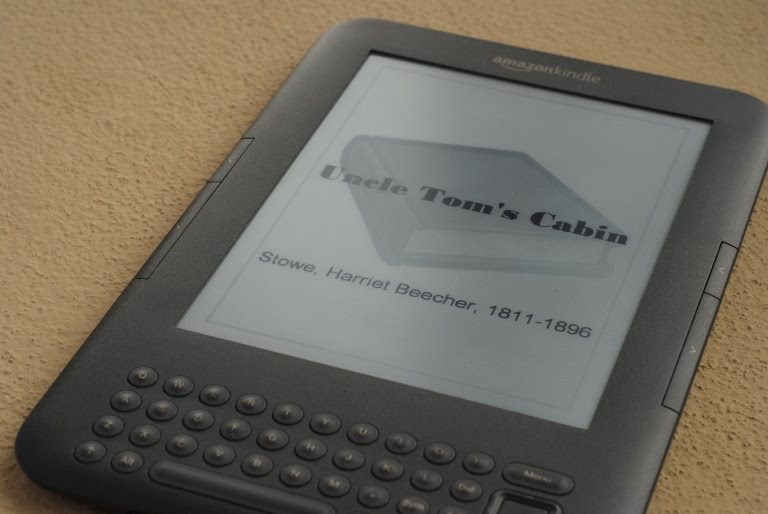
The Simple Dollar just had a post about free resources for Kindle. Remember, a Kindle reader is the little grey machine that you can buy to read e-books, but you don't actually need the physical machine to use the Kindle program. Instead, you can just download the free program for your computer, phone, or other device. Click here for more information and the download link.
In any case, the resources listed on The Simple Dollar are all quite good, so take a look!
Update 21-Feb-2011: My friend Brad told me about this link, which can help you create your own ebooks from pdf, doc, or Word files. Thanks, Brad!