Monday, February 28, 2011

Common Error: Using "Have" Incorrectly

Hello, and welcome again to Mistake Monday! I often hear my Spanish-speaking students make this mistake, but I've also heard native speakers of other languages saying these incorrect phrases, so it's a good idea to look at it:

Common Error: Using "have" incorrectly
DON’T say this:I have 23 years.
Tina has 10 months at her new job.
I have hunger.
This question has no sense.
WHY?-Phrases like this may make sense in other languages, but in English we sometimes have to re-phrase them or use a different helping verb.


-For example, in English a person doesn't "have" a number of years; instead, s/he is a number of years old: "John is 23 (years old)."*
*Note: in this example, you can say "John is 23" or "John is 23 years old," but not "John is 23 years."


-In the second incorrect example above, if you want to say how long something has been happening, generally you use a present perfect tense and the word for: "Tina has worked at her new job for 10 months" OR "Tina has been working at her new job for 10 months."


-In the third example, we also need to use the verb "to be" as our helping verb: "I am hungry." (Notice that we change hunger to hungry, since "hungry" is an adjective). We generally use the verb "to be" with other temporary emotions like:
(TO BE + __ ): hungry, thirsty, awake, asleep, tired, hot, cold, bored, annoyed, happy, etc.


-Finally, in some languages things can "have" sense, but in English if something is logical we say "it makes sense," and if it's illogical or confusing, "it doesn't make sense." 
INSTEAD, SAY THIS:-"I am 23 (years old)."
-"Tina has worked at her new job for 5 months." OR "Tina has been working at her new job for 5 months."
-"I am hungry/thirsty/bored/excited."
-"This question makes no sense." OR, more naturally: "This question doesn't make sense."

Well, that's it for this week--I hope it all makes sense! If you are confused or have questions or comments, please leave a comment or contact us. Thanks for reading!

Thursday, February 24, 2011

What Are Your Language-Learning Goals?

(Image from Wikimedia Commons; link here.)
This post isn't directly connected to language learning, but it is related to motivation, which is a very important characteristic that most successful language learners have.

A supervisor recently sent us a quote by Bruce Lee, which I thought was interesting, since Bruce Lee was an actor and a martial arts legend. Apparently, he was also a bit of a philosopher! Our supervisor also recommended that I search for other quotes by Bruce Lee. There are many sites on the internet with famous quotations, but on this site I found a few that I especially liked. They are:

A goal is not always meant to be reached; it often serves simply as something to aim at.

A wise man can learn more from a foolish question than a fool can learn from a wise answer.

If you spend too much time thinking about a thing, you'll never get it done.

Some thoughts for people learning new languages:
-What are your goals for learning a new language? (If you've not set goals, it may sound like a strange or new idea, but you should try it!) 
-What motivates you to learn a new language, and what things slow you down? 
-How can you overcome the obstacles that slow you down?

Feel free to share in the comments section. Until next time, have a good day!

Monday, February 21, 2011

Common Error: Confusing "it's" and "its"

Hello, and welcome to Mistake Monday! Our common error today is a small one, but it's very common. In fact, it may be even more common for native speakers than English learners. Still, at Sitzman ABC we're here to help everybody, so let's check this one out!

Common Error: Confusing "it's" and "its"
DON’T say this:The happy dog looked at me and wagged it's tail.
Its really hot today, isn't it?
Today it's Monday.
WHY?-"it's" is a contraction of the words "it is"--it has an apostrophe because the apostrophe replaces the missing letter
-"its" is the possessive form of the word "it"
-The third example above is also incorrect because it's redundant. "Today" is the subject, so it's not necessary to say "it" also, since that would basically repeat the subject. 
INSTEAD, SAY THIS:-"The happy dog looked at me and wagged its tail."
-"It's really hot today, isn't it?"
-"Today is Monday."
-"I think you'll probably not make this mistake anymore, since it's so easy to correct."

Well, that's it for now. If you have questions or comments, please leave a comment or contact us. Thanks for reading!

Sunday, February 20, 2011

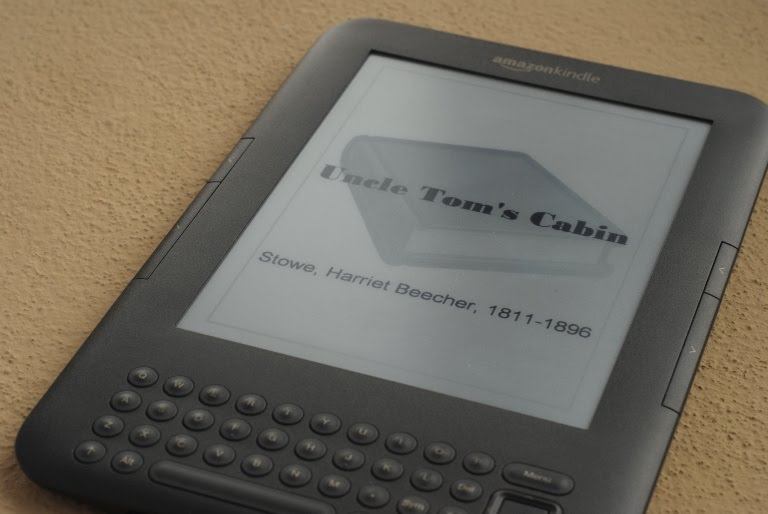
Free Kindle Resources - And You Don't Actually Need The Kindle Reader!


The Simple Dollar just had a post about free resources for Kindle. Remember, a Kindle reader is the little grey machine that you can buy to read e-books, but you don't actually need the physical machine to use the Kindle program. Instead, you can just download the free program for your computer, phone, or other device. Click here for more information and the download link.

In any case, the resources listed on The Simple Dollar are all quite good, so take a look!

Update 21-Feb-2011: My friend Brad told me about this link, which can help you create your own ebooks from pdf, doc, or Word files. Thanks, Brad!

Monday, February 14, 2011

Common Error: Incorrect Plurals

Happy Valentine's Day, but more importantly, Happy Mistake Monday! We're back tonight with a common error that happens more times than you might imagine. It involves nouns with irregular plurals. Let's take a look:

Common Error: Incorrect Plurals (man, woman, child, person)
DON’T say this:Many beautiful womans live in Costa Rica.
This taxi can only carry four persons.
My wife and I want to have two childs.
WHY?-Some nouns in English have irregular plurals. Most plurals in English are formed by adding an "-s" or "-es" to the end of a word, but with irregular plurals, you need to change the word in a different way. For example, in plural:
-man becomes men
-woman becomes women
-child becomes children
-and person generally becomes people* 
*(The words "persons" and "people" do exist, but they're generally used in a legal or administrative context)
INSTEAD, SAY THIS:-"Many beautiful women live in Costa Rica."
-"This taxi can only carry four people."
-"My wife and I want to have two children."
-"There are many differences between women and men."
-"People are strange." (Remember that "people" is plural in English!)

What other irregular plurals have you come across while learning English? Which ones cause you the most trouble? Be sure to join in the conversation in the comments section!

So, that's it for today. If you have questions or comments, please leave a comment or contact us. Thanks for reading!

Thursday, February 10, 2011

Two Useful English Links

Good afternoon, everyone!

I want to share two more English-language links with you. The first one is called "China 232." Despite the name, it's actually a site with English-learning podcasts. The site has two areas: "normal" and "VIP." The VIP part costs money and has more resources, but free normal section is also quite good. The site is done by two Canadian brothers living in China, and their English is very clear. Typically, they pick a topic, present a short dialogue, and explain some of the important vocabulary in the dialogue. Their latest topic was Facebook, actually.

My coworker Lidio showed me another site a few days ago. It's called "Qwiki," and it's a sort of interactive Wikipedia with videos, pictures, and spoken text. The voice you hear definitely sounds robotic, but it's still interesting to check out, and a good place to start if you're looking for information or just curious about new things. Here's an article about Niagara Falls to get you started. Check it out!

So, good luck with these links. If you have comments, questions, or other good links you want to suggest, please tell us!